-

Hanna Araujo Ulmer
METE-LANÇA
Workshop
Sepember 2025
My name has changed.
Please call me Sadness; my last name is Lovelessness.
On Heart Street, I share an apartment with friends
Whose names are Pain and Loneliness.
With no one to love me, the bar has become my comfort—
The place where I refill my tears, which never stop falling.
No one asks how my day was,
No one to share my sorrows or my joys.
I’m so starved for affection
That when my dog barks, I hear “I love you.”
I prank-call myself
Just to feel like someone called me.
– Nível de Carência by Pablo.
Free translation by Hanna Araujo Ulmer
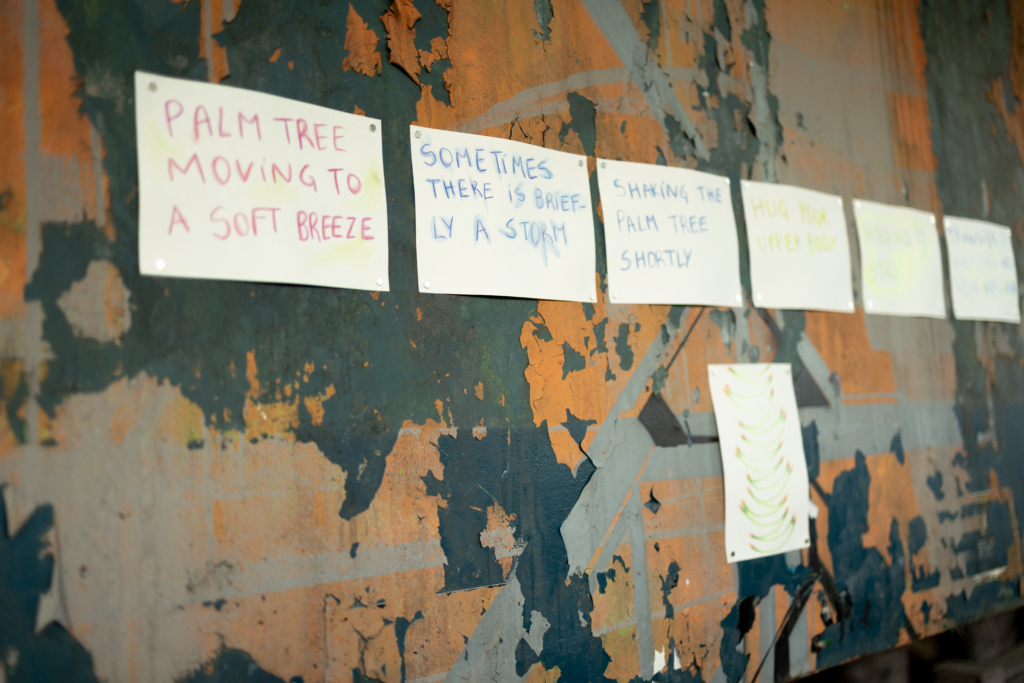
Mete-Lança is, at its core, an exercise in collective movement. The work’s structure develops as a dance workshop series. Throughout the different classes, each movement is introduced to the participants through a fictional storytelling that serves as both context and instruction for the action.
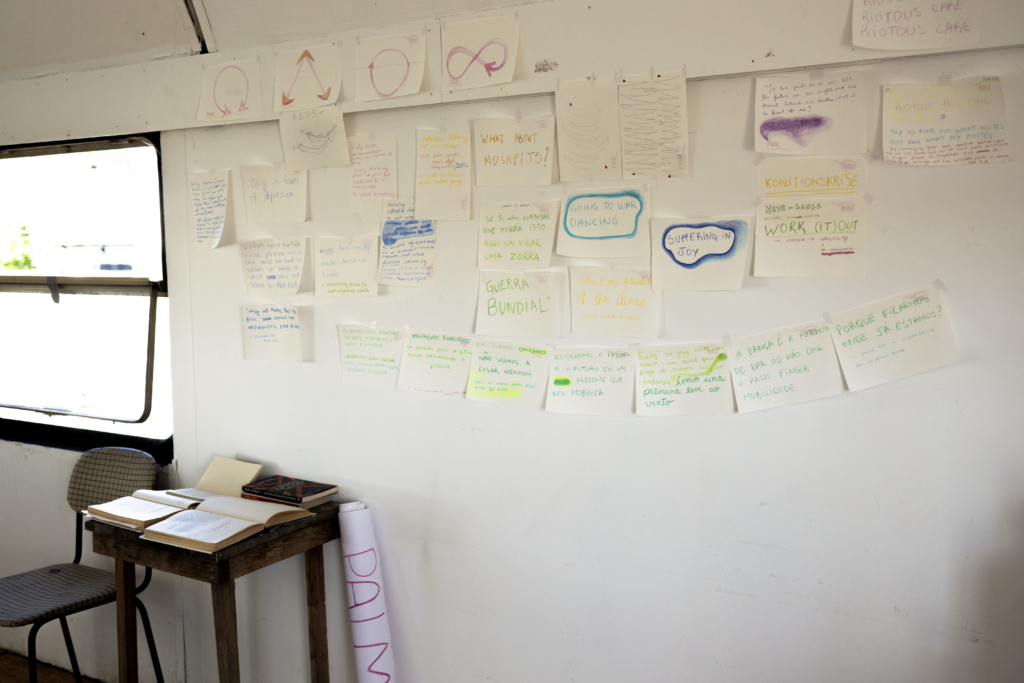
During my stay at the Raumstation Residency I had the chance to develop one more chapter of this ongoing research. Following the Mete-Lança #1 Holistic Ass-Shaking Workout, #2 Arrocha as a Method of Joy was developed centering Arrocha music and its dance.
Arrocha is a music genre widely popular in northeastern Brazil. Often associated with the broader category of sofrência, it gathers in its lyrics imaginaries of sorrow in very casual and unexpected stories. Meaning something like “suffery,” sofrência refers to songs that speak of deep pain — whether heartbreak or other kinds of catastrophe. I am fascinated by the ability to turn pain into pleasure, to find joy through dance.
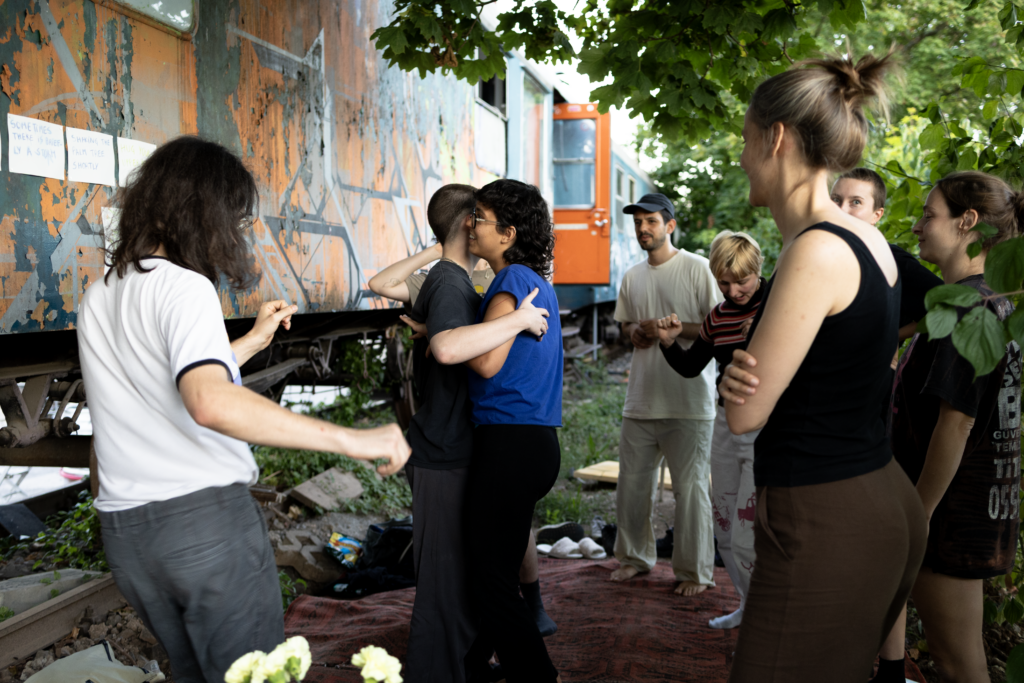
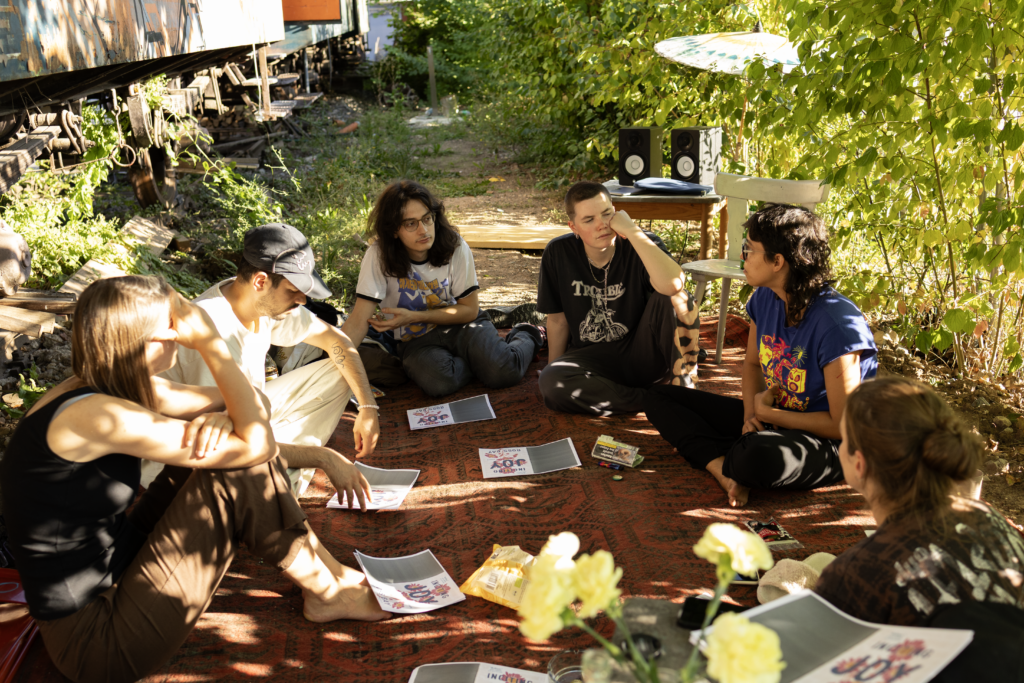
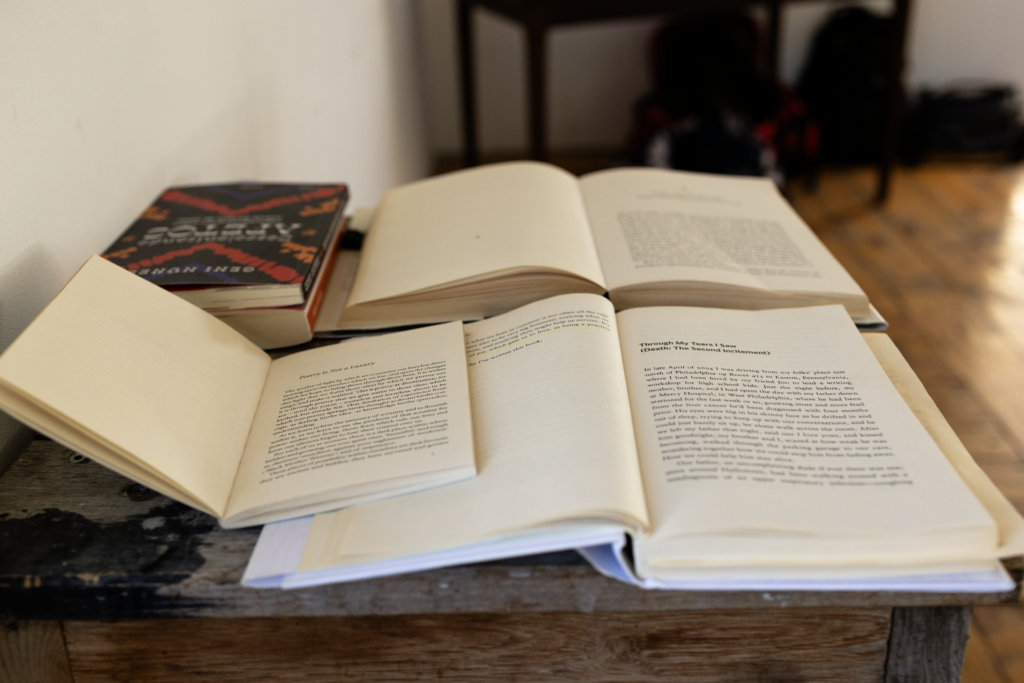
On a sunny September day, we read out loud the first chapter of Inciting Joy by Ross Gay, a book that inspired me on the possibility of transfor-ming realities through collectivity. After a short round of sharing about the text and our personal approaches to loss, we moved forward to the basic steps of Arrocha dancing. And we danced — alone, in pairs, in trios, foursomes, and more.
Sadness and loneliness are today no longer private symptoms, but a common experience. As Audre Lorde writes in Poetry Is Not a Luxury: “As we learn to bear the intimacy of scrutiny and to flourish within it, as we learn to use the products of that scrutiny for power within our living, those fears which rule our lives and form our silences begin to lose their control over us.” Arrocha as a Method of Joy reminds us of the powerful tools held in sweat, joy, grief and poetry in times of depression.
Photocredits: Seonha Park